
The cost of standing still: September at Kyoto
This month the theme is money rather than molecules. Aurora Energy Research's Thaddäus Kreisig explains why "security of supply" doesn't mean what it used to in European boardrooms. The gas keeps flowing. It's the price that won't sit still, and an e-boiler wired straight to the grid doesn't fix that, it just swaps one volatile market for another.
We then take a hard look at Europe's chemical industry, which buys natural gas twice over, pays roughly three times what its American competitors pay, and has already squeezed most of what efficiency had left to give.
In this issue you'll also find an IEA-backed webinar on 14 October where our CCO Tim de Haas presents, and a new General Counsel joining the team in Oslo.

Breaking the gas trap: the new rules of "security of supply"
Five years ago, the question in European industrial boardrooms was whether the gas would keep flowing. It did. The question now is what it will cost next quarter, and that one is much harder to answer.
We sat down with Thaddäus Kreisig, Advisory Principal at Aurora Energy Research, to talk about what has changed. His argument: for energy-heavy industry exposed to international competition, predictable OPEX has stopped being a financial metric and become a survival condition. And an e-boiler wired straight into the live grid doesn't deliver it, it just swaps one volatile market for another.
He also points to a number worth sitting with. Germany alone saw 600 hours of negative power prices last year, and around a thousand hours close to zero. That window widens every year as wind and solar build out. But only if you have somewhere to store the heat.

The chemical industry doesn't just burn gas. It buys it twice.
Plastic, fertiliser, paint, the coating on a painkiller, most of it starts with natural gas. And in a chemical plant, gas does two jobs at once. According to Cefic's 2025 Facts & Figures, a quarter to half of the natural gas a plant buys ends up inside the product as raw material. The rest gets burned to make steam and power.
The first half is chemistry. The second half is a bill, and it's the one that moves every time the market does.
Cefic's numbers show gas and electricity together making up two-thirds of the sector's energy use, with European gas running at roughly three times the US price and that gap expected to stay wide through 2030. Efficiency won't close it: the industry has already taken 40% off its energy use per tonne since 1991. There isn't much left to squeeze. What's left is changing the fuel.
The numbers, from the European Environment Agency:
- 155 million tonnes of CO₂-equivalent from Europe's chemical industry in 2021, around 5% of the EU's total net emissions
- 67% of it came from burning fuel, not from the chemical reactions themselves
- The remaining 33% comes from the processes themselves, nitric acid, ammonia, and the like, and no amount of clean steam touches that share
Where storage changes the maths
Be clear about the limits first. Steam cracking runs above 800°C. Gas that goes into the product isn't a heat problem at all. Neither of those is ours to solve, and anyone telling you otherwise is selling a silver bullet.
The steam layer is a different story. Distillation, separating one liquid from another, is the most energy-hungry job in the industry, and research on European industrial heat demand puts much of that load below 200°C. That's steam, not flame. Heating, drying, separating, holding a reactor at temperature: Heatcube delivers steam from 150 to 300°C, which is where that work lives.
The problem was never whether an electric boiler can make steam. It's that a plant running around the clock can not only buy power when it's cheap. Storage breaks that link: charge when power is cheap, deliver steam whenever the line needs it. The energy bill stops tracking the market and starts tracking the cheapest hours in it.
And the capex question, the question that kills most of these projects long before engineering gets a look, doesn't have to be relevant for you. With Heat-as-a-Service you buy the steam, not the equipment.
For a sector where energy is two-thirds of the input and the competitor across the Atlantic pays a third of the price, gas isn't a safety net. It's the exposure.
Read the facts and figures of the European Chemical Industry

Thermal energy storage, live: an IEA-backed webinar on 14 October
On 14 October, our CCO Tim de Haas joins the Industrial Transition Series, a webinar programme run by the IETS Technology Collaboration Programme under the auspices of the International Energy Agency. This edition is dedicated entirely to thermal energy storage.
Tim's session is titled How to reduce your costs for process heat, and it's grounded in KALL Ingredients, where a Heatcube is delivering food-grade steam today, plugged into the plant's existing steam infrastructure rather than replacing it.
He's in good company. EPYR will share results from France's first power-to-heat unit paired with high-temperature storage, now more than six months into operation at the WEPA paper mill. DLR will introduce a new joint task between the Energy Storage and IETS programmes.
The details
- 📅 When: 14 October 2026, 15:00–16:30 CEST
- 📍 Where: Online
- Moderator: Robert Maertens, IREES
- Also presenting: Elin Svensson (IETS TCP), Christoph Rathgeber (Energy Storage TCP), Kevin Ludwig (DLR), Faustine Gaymard (EPYR)
If you've been trying to work out whether electrified steam actually adds up on your site, this is 90 minutes with the people who have already done it. There's a Q&A at the end, bring the awkward questions.

Patrick Robb joins Kyoto as General Counsel
Patrick Robb takes ownership of Kyoto's legal and contractual framework as deployments scale across Europe. He arrives from Vårgrønn, where he handled EPC legal matters on floating offshore wind, and brings twelve years of work on the contracts behind renewable infrastructure: turbine supply and service agreements at MHI Vestas, high-voltage cable contracts at Nexans, and partnering and acquisition deals at Equinor. He is a qualified solicitor in England and Wales.
As Kyoto moves from individual projects to a growing portfolio of Heatcube deployments, the contractual side of the business grows with it. Each project brings together customers, power suppliers, grid operators, funding partners and local requirements, often over agreements designed to last for years. Patrick brings the experience to build that framework for scale, while keeping projects moving from agreement to execution.
Welcome to the team, Patrick!
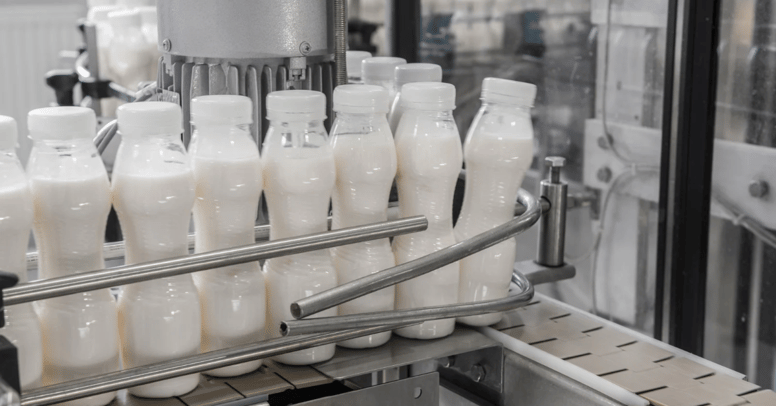
Next month: How to decarbonise dairy
Knowing you have to get off gas is the easy part. Getting the budget for it is the hard part, and that's usually where a dairy energy manager gets stuck, somewhere between a rough sense of what the transition takes and knowing how to act on it.
Next month, we sit down with Elena Davydova, Business Development Manager at Kyoto Group, for a guide aimed squarely at the person whose job it is to convince management. Where the gas is actually hiding in a dairy, evaporation, drying, UHT, CIP, and why the biggest, steadiest load matters more than the hottest one. And a four-step recipe you can take into a management meeting, starting with running the "what if we wait?" numbers.
Stay tuned!
/03%20Blog/3.2%20Icons/facebook.svg)
/03%20Blog/3.2%20Icons/linkedin.svg)
/03%20Blog/3.2%20Icons/twitter.svg)