
Waiting is a position too: October at Kyoto
Europe went into the heating season with less gas in storage than a year ago, and the Dutch TTF benchmark trading above €100/MWh. In this edition, our Business Analyst Salvatore Guccione explains what that does to a steam bill, and why waiting for "normal" gas prices has become the expensive option.
We launch Inside Kyoto, a new relay series where our people pass the baton to each other, starting with the man who convinces suppliers to build things they have never built before. Elena Davydova shows where the gas is hiding in a dairy, with a four-step recipe to take into the next management meeting.
In this issue you'll also find out where to meet us in Berlin on 5 November.

Reliable gas boilers, uncertain bills: what to assess before 2027
EU gas storage was 72% full on 1 October, compared with 83% a year earlier. That leaves a smaller buffer heading into winter, after a season in which storage supplied about a quarter of EU gas demand.
Prices have risen too. Dutch TTF futures traded above €100/MWh on 30 October, up from around €49/MWh in early June. A plant’s actual fuel bill depends on its supply contract and hedge cover, but uncovered purchases and contracts coming up for renewal are the first to feel it.
“Gas boilers are proven and reliable, but reliance on gas has become a business risk,” says Salvatore Guccione, PhD, Business Analyst at Kyoto Group. “The question is how much gas-price exposure the business is prepared to carry.”
In the full commentary, Salvatore breaks down the three pressures behind the price (LNG availability, storage and weather), shows what €100 gas does to the cost of producing steam, and sets out the one decision to make before year-end.
Even a calm winter will cost money. The real question is how much of it your customers will accept, and how much your margin absorbs.
Read Salvatore's full commentary
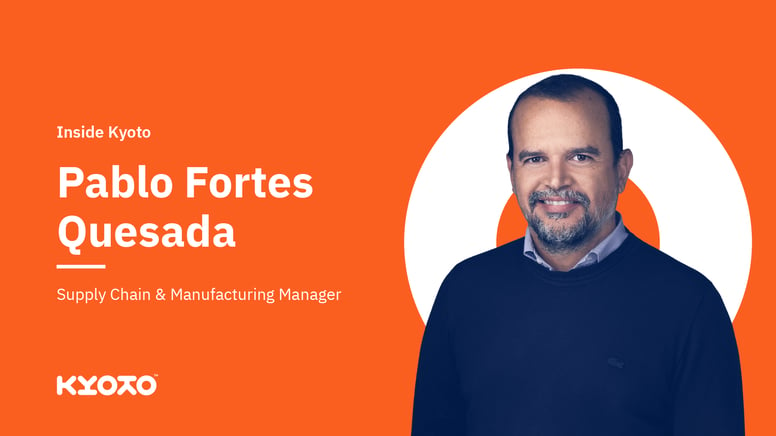
Inside Kyoto: Meet Pablo, the man convincing suppliers to join the energy revolution
Who are the people behind the Heatcube? With Inside Kyoto, one colleague answers a handful of questions and then passes the baton to the next.
First up is Pablo Fortes Quesada, Supply Chain & Manufacturing Manager. After 13 years in concentrated solar power, molten salt was nothing new to him. What caught his attention was the challenge of taking it somewhere new: decarbonising industrial heat. And his job turns the usual purchasing relationship on its head:
"People have this common misconception that suppliers are always knocking on your door, trying to sell you things. In my case, it's the opposite: I'm the one trying to convince the suppliers to join us on this journey."
Read on for his dinner-party explanation of what he actually does, why he sees the energy transition as a question of European independence, and who he hands the baton to next.
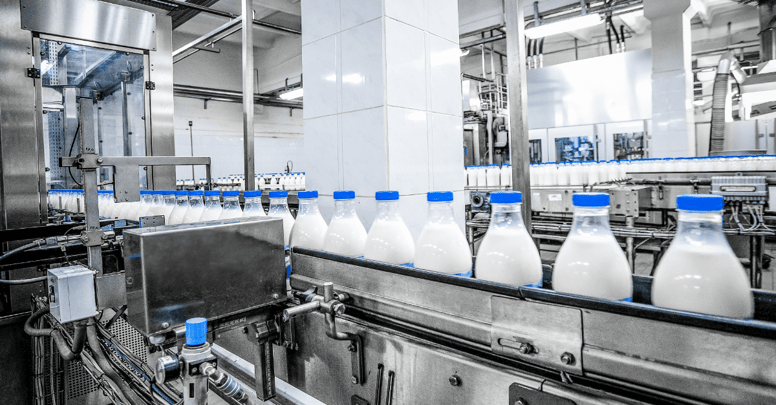
How to decarbonize dairy
What if every bag of milk powder came with a carbon price tag? Increasingly, it does. Most of the heat that turns milk into powder, cheese and long-life cartons still comes from burning gas, and the person who has to change that is usually stuck in the middle: ESG targets, customer pressure and volatile gas prices on one side, a production line that never stops and a management team that wants protected margins on the other.
We sat down with Elena Davydova, Business Development Manager at Kyoto Group, for a guide written for the person whose job it is to convince management.
The full guide ends with a four-step recipe, from checking whether your emission cuts are on track to the final management decision gate, starting with the "what if we wait?"

Energy meets Industries, 5 November
How does industrial transformation stay affordable in an unpredictable world? That's the question at Energy meets Industries 2026, hosted by Drees & Sommer at the Berlin headquarters of grid operator 50Hertz.
The agenda is unusually close to home. One of the deep-dive sessions is titled Thermal Storage vs. BESS, and others cover decentralised energy supply for industrial sites and decarbonising district heating in Europe. These are exactly the trade-offs our customers work through before they sign: store electricity as heat or as electrons, electrify now or wait, carry the capex or buy the steam.
We're not presenting this year. Our CCO Tim de Haas and Roger Wietusch, Commercial Manager DACH, are there to listen, compare notes and talk numbers with the people who own industrial heat budgets.
The details
- When: 5 November 2026, 09:00–17:00
- Where: 50Hertz headquarters, Berlin
- Host: Drees & Sommer
- Evening programme: 4 November at the Moabit Power Plant
Book a slot and bring your current heat load, steam temperature and gas price, and we'll show you what the switch looks like in your numbers. In short: bring your steam bill.

Coming up next month: Your customer is asking about your boiler
Four major pharma companies, AstraZeneca, Sanofi, UCB and Opella, have joined forces against one source of emissions: the gas-fired steam boilers in their supply chains. The Clean Heat Program they back already covers more than 1,000 sites. So plant managers and CFOs at API producers and contract manufacturers are now hearing a new question from their biggest customers: how do you make your steam?
In episode two of Inside Kyoto, the baton passes to the colleague who works the other end of the same chain: convincing customers. Who is it?
We'll answer both in our November newsletter, along with what this means for anyone who supplies big pharma, where the funding to act could come from, and why the fear of revalidation may be smaller than it looks: in pharma, the steam that touches the product doesn't come straight from the boiler.
Stay tuned!